Communities
Our Commitment to Working in India
Child labor is a significant challenge in rural areas of India. To help address it, we have developed an education and monitoring program for our seed coordinators and contract farmers. Our contracts with our business partners all contain language reinforcing our position that no child labor be used. We’ve spent seven years mitigating risks and remediating incidents when they are uncovered in our hybrid cottonseed production and more recently, vegetable seed fields as well.
Reduction in Child Labor in Business Partner Cottonseed Production Since 2006
Percent of Total Laborers Found to be Children
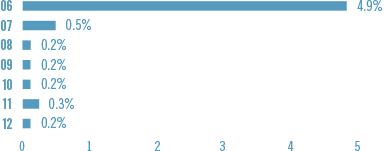
Monsanto Internal Monitoring Programs Data
Reduction in Child Labor in Business Partner Vegetable Seed Production Since 2006
Percent of Total Laborers Found to be Children
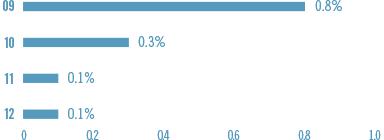
Monsanto Internal Monitoring Programs Data
In 2011, we had a major increase in the number of business partners in India due to high demand for cotton seeds. In 2012, our grower base still remained at an historical high, but through our continued efforts, policies and screening process, our business partners’ child labor statistics stayed at historical lows, under half of one percent.
In the vegetable seed fields, our production staff has the additional task of monitoring the fields for the presence of child labor. We’ve created a reward system for the growers and safety checklists to be completed at the field to protect workers from open wells, and electrical and trip hazards.
Our work to increase awareness of child labor doesn’t end with our business partners. We reached out to local villages and hired social workers to speak to the families of child workers. They spoke at schools and to the village elders about the importance of keeping children in school. They also followed up to make sure children who were found on the fields and sent back to school stayed there. This program has been extremely effective.
Additionally, our people created a project in two Indian states through the Monsanto Fund. This project supports 60 schools, engages local stakeholders and works with parents to send their children to school instead of the fields. The response has been fantastic.
We also felt it was important to go beyond educating the villagers on the dangers of child labor, and take our involvement out of the field and into the classroom. To this end, we’ve made several donations that provide important support for local schools. Examples of the supplies we have donated include dinnerware, computer desks and chairs, PA systems, physics lab equipment, and biology charts and specimens for classroom learning. These efforts created an environment at school that is designed to attract children and keep them out of the fields during the school day.