Environment
Climate Change and the Impact on Food Security
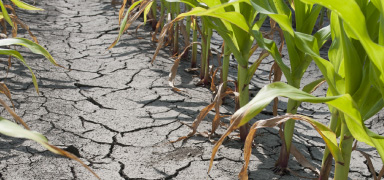
THE AVERAGE TEMPERATURE IN THE U.S. HAS RISEN 1.5 DEGREES FAHRENHEIT SINCE 1895
Monsanto Fellows
We established the Fellow Program in the late 1940’s to recognize the exceptionally talented women and men in the scientific community. This program seeks to encourage originality and innovation in the technical community, to improve cross-functional networking, and to enhance the impact of our technology on the future of the company. Participants in the program are expected to remain active in technology and to serve as company-wide consultants in their areas of expertise. They are also expected to provide strategic technical leadership to Monsanto, identify and recommend new technologies of potential importance to our future, and play an active role in the mentoring and development of scientists across the organization.
There are four levels of Fellows (Associate, Fellow, Senior, and Distinguished). Distinguished Fellows are recognized both within Monsanto and externally as an expert in their field, with major influence on our strategic technical direction.
In 2007, a panel of Monsanto Fellows reviewed existing scientific studies and concluded that climate change would affect agriculture. However, a 2013 external draft report has recently concluded that the climate is actually changing more quickly than originally projected. This report was published by the National Climate Assessment and Development Advisory Committee (NACDAC), a federal advisory committee established by the U.S. Government. Over 200 scientists contributed to this report, which is overseen by an advisory panel that includes Monsanto’s own Dave Gustafson, Senior Fellow and Director of Environmental and Ag Policy Modeling.
The new report suggests near-term impacts to agriculture will likely be greater than previously concluded. The average temperature in the U.S. has risen 1.5 degrees Fahrenheit since 1895, with most of that increase coming in the last 30 years. Additionally, the frost-free growing season is expanding, with anywhere from five to 21 extra frost-free days per year compared to the early 20th century.
These kinds of temperature increases and changes in growing seasons can significantly disrupt the agricultural and food production industry. One of the potential impacts of increasing temperatures is severe drought. In 2012, the U.S. got a close look at what a drought can mean to their dinner tables, and farmers got a close look at the havoc that changing temperatures can have on their crops and livelihoods. Climate change scientists look at the drought of 2012 as a sign of things to come. If we have a decade of very high drought and heat, the consequences could be crippling. A two degree Celsius increase in a single decade would be enough to reduce global yields by roughly 10 percent. Couple that decrease with an increase in population, and we are facing a serious threat to global food security.
There’s no way around it; climate change is worse than previously projected, and it will have a dramatic effect on agriculture if we don’t do all we can to find innovative solutions in breeding, irrigation and technology. We believe our people are well positioned to make a meaningful contribution.
Advancing Innovations to Predict the Effects of Climate Change
We know we can’t be on the defensive when it comes to climate change. We have to be at the forefront of new advancements and be part of the discussion as it happens on a global scale in real-time. That’s why we’re a part of the International Life Sciences Institutes (ILSI) Research Foundation’s new Center for Integrated Modeling of Sustainable Agriculture and Nutrition Security (CIMSANS). We proudly support this global forum. In fact, Monsanto’s Dave Gustafson is serving as interim director.
3 OBJECTIVES:
ADVANCE SCIENCE
CREATE NEW PARTNERSHIPS
INFORM POLICY
This organization brings together scientists from the private and public sector to study the impacts of climate change and resource scarcity – especially water – on food security. Reliable prediction of future yields and food availability in staple crops is challenging and is further complicated by the potential effects of climate change. That’s why the use of integrated modeling, where simulation tools are used to interlink individual models of climate, crop growth, economic and environmental processes, has emerged as a way to better assess the impact of climate change. CIMSANS was developed to increase the quality of these data inputs and to be transparent about their underlying assumptions, so that public policy decisions and agricultural innovation strategies could be made soundly. CIMSANS has three key objectives: to advance science, create new partnerships, and inform policy.
CIMSANS has agreed to:
- Support data standardization and transparency in integrated modeling
- Support efforts to improve the individual component models, especially for crop growth
- Support the collection of better input data for integrated modeling of agricultural production and human nutrition
- Support the development of a distributed approach for repositories of standard data sets
- Partner to create the best available predictions for productivity of key staple crops, taking into account climate change, water and input availability, technology gains, and supply demand estimates
- Create sustainable private/public partnerships that utilize emerging science and technologies to urgently address gaps that affect crop yield gaps, food availability and human nutrition
Through its support of CIMSANS, Monsanto was pleased to help host recent workshops with the Food and Agriculture Organization (FAO), Consultative Group on International Agricultural Research (CGIAR) and other ag research institutes that are part of the United Nations (UN). These workshops help find new ways for governments and others to come up with responses to the future challenges of climate change, water scarcity and price demand.
Climate change is here. Our responsibility is to not only develop products and procedures that help farmers adapt today, but to also be a part of the discussion on how to meet the challenges of tomorrow.