Food & Nutrition
Partnering for African Agriculture
Understanding the severity of the challenges that smallholder farmers face, Monsanto and our partners are working with African NGOs, scientists and governments to support African smallholder farmers.
Three-quarters of the world’s most severe droughts over the past 10 years have occurred in Africa. These droughts make farming risky for millions of smallholder farmers, most of whom are women. Corn or maize is the most widely grown staple crop in Africa – more than 300 million Africans depend on it as their main food source. Maize production is severely affected by drought, which can lead to unpredictable and low yields, and at worst, complete crop failure.
Like drought, insects present another challenge to African farmers who often have few resources to manage them. During drought, maize that is able to survive becomes particularly susceptible to pests, especially stem borers. This can put even greater stress on farmers’ abilities to grow and harvest enough maize to feed their families.
Monsanto’s commitment to Africa and smallholder farmers continues to grow. From our initial involvement in the World Economic Forum’s (WEF) New Vision for Agriculture to our current involvement in Water Efficient Maize for Africa (WEMA) and Grow Africa, our people are committed to playing our part in helping to improve the lives of rural African farmers through education, improvements in infrastructure and innovation.
A New Vision for Agriculture
Our teams played an active role in the formation of the WEF’s New Vision for Agriculture, which engages leaders of business, government, civil society, farmers and development partners to achieve sustainable agricultural growth in the face of a growing world population. In 2012, 26 leading partner companies, representing the entire food value chain, were working to build a framework for advancing global agriculture over the course of the next several decades. The New Vision for Agriculture focuses on three critical goals:
- To meet nutritional demands, while providing affordable choices across the food chain.
- To conserve or enhance the quality and quantity of natural resources and meet the challenges of a changing climate.
- To drive rural and national economic development around the globe with well-targeted investments.
The initiative established a “20/20/20” framework for achieving the WEF goals. The formula specified the following: increasing productivity by 20 percent per decade, reducing the environmental footprint by 20 percent per decade, and increasing the income of the rural family by 20 percent per decade.
INCREASE PRODUCTIVITY 20% PER DECADE
REDUCE ENVIRONMENTAL FOOTPRINT 20% PER DECADE
INCREASE RURAL FAMILY INCOME 20% PER DECADE
As a result, the partners are working to improve the global food system, while improving livelihoods and ecosystems worldwide. The Vision’s knowledge partners—including The Food and Agriculture Organization of the United Nations (FAO), the Harvard University Kennedy School’s Corporate Social Responsibility Initiative, and the International Food Policy Research Institute—are actively involved in this cause. While the New Vision for Agriculture remains a global initiative, seven African countries have engaged in a partnership specifically for their region that builds on the Vision’s public-private partnership model.
Grow Africa
The Grow Africa partnership is an African-led, multi-stakeholder platform and a public-private partnership. This initiative helps smallholder farmers increase their productivity, thereby improving their lives.
At the 2012 G8 Summit, we announced a $50 million commitment over the next 10 years to support sustained agricultural development in sub-Saharan Africa. We saw this investment as a natural outgrowth of our commitment to improve lives and produce more food. We look forward to working with African leaders and communities and supporting them in turning their ideas into action. We believe we can help fuel the development of systems that can increase productivity while strengthening the African agricultural value chain.
Smallholder farmers in sub-Saharan Africa don’t always have access to markets or information. They often don’t have agro-dealer networks or grain buyers to assist them. One of the many platforms within the Grow Africa partnership is helping to build a supportive infrastructure for farmers. We’re also focusing on ways to assist farmers with getting their crops to market, which will increase their incomes and improve their communities.
Tanzania: A Holistic Approach
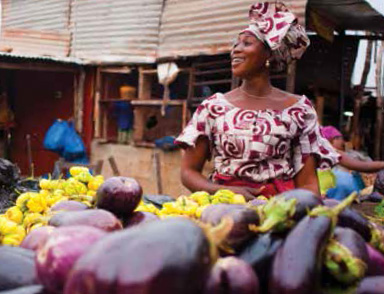
Agriculture is a central component of Tanzania’s economy, and the Tanzanian government has made agriculture a national priority. Tanzanian President Jakaya Kikwete initiated a program to achieve food security, poverty reduction and increased economic growth called Kilimo Kwanza (Agriculture First). Building on this vision, President Kikwete designated the Southern Agricultural Growth Corridor of Tanzania (SAGCOT) as the focus of a new partnership in 2010, which aims to enable agricultural growth in this region. Monsanto has been a partner of SAGCOT since the beginning, and at the 2012 G8 Summit, we announced our commitment to work with local partners in Tanzania to help improve the maize and vegetable value-chains in the region. Through partnerships with NGOs, farmer organizations, research organizations, and the Ministry of Agriculture, Monsanto is focusing its resources and efforts on supporting smallholder farmers in the SAGCOT. Initial partnering concepts include the following:
- Support of the Tanzania Agro-dealer Strengthening Program (TASP) to train 600 agro-dealers in the Iringa, Kilolo, Njombe, and Songea districts
- Expansion of access to affordable financial services that will enable farmers to generate more income for their families and contribute to the economic development of their communities
- Provision of innovative tools and training to agriculture extension workers to enhance soil health in the SAGCOT
- Support of farmer outreach days throughout the corridor to reach approximately two hundred thousand farmers with demonstrations and training opportunities of agricultural best practices
- Support of tomato farmer groups to collectively purchase inputs, receive training, and market their products
Our people understand that in addition to raising yields, it takes markets to make agriculture work. We are exploring collaborations with grain handlers and companies interested in value-added products. We intend for these collaborations to help raise productivity and grain quality, reduce waste through better storage, and support mechanisms that improve grain price predictability and enhance economic opportunity for Tanzanian farmers.